In the landscape of modern dermatology and cellular research, peptides are heralded as the ultimate bio-regulators. From wound healing to collagen synthesis, these short chains of amino acids act as messenger molecules that signal cells to regenerate. However, a significant physical barrier stands between the promise of these molecules and their biological efficacy: The 500 Dalton Rule.
For researchers and formulators, understanding this rule is the difference between a product that creates real physiological change and one that simply evaporates on the skin’s surface.
The Physics of Permeability: The 500 Dalton Rule
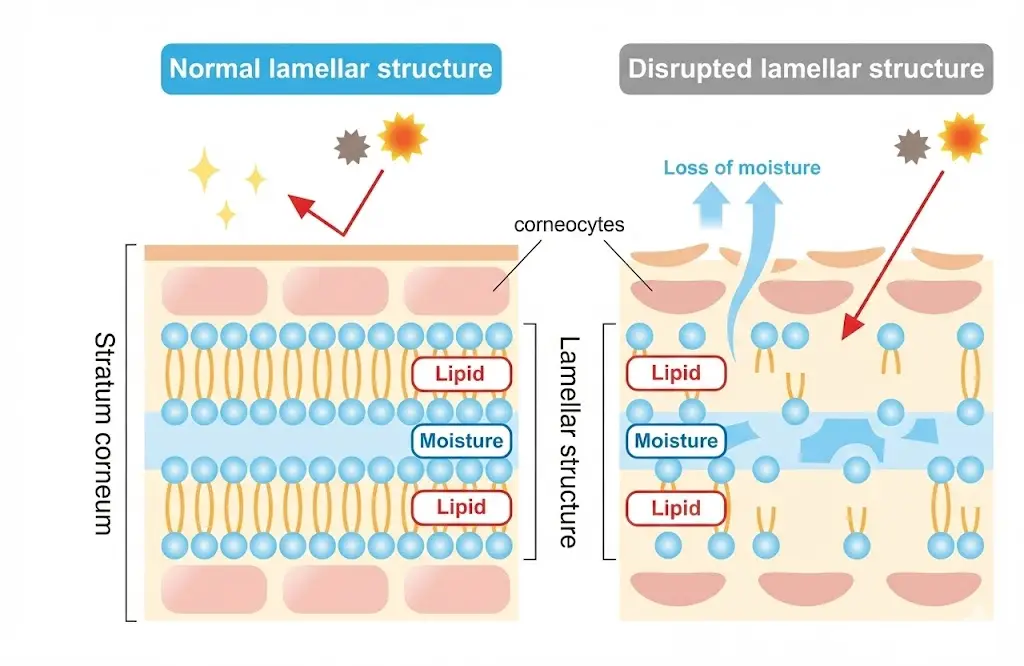
The 500 Dalton Rule is a clinical benchmark in percutaneous absorption first formalized by Jan Bos and Marcus Meinardi. It posits that any chemical compound with a molecular weight exceeding 500 Daltons (Da) is effectively blocked by the stratum corneum—the lipid-rich, outermost “dead” layer of the epidermis.
The Barrier Challenge
The skin’s “bricks and mortar” structure (corneocytes and intercellular lipids) is designed to exclude foreign substances.
- Collagen Protein (~300,000 Da): Often included in luxury topicals, it is roughly 600 times too large to penetrate the dermis.
- Standard Peptides (800 – 2,000 Da): Many complex chains used in retail products are biologically inert in a cream because they cannot squeeze through the tight junctions of the skin cells.
When these molecules fail to pass the barrier, they act merely as humectants—holding moisture on the surface—rather than stimulating the fibroblast cells responsible for deep tissue repair.
High-Purity Research Peptides: Bypassing the Limit
To achieve the results seen in clinical trials, researchers utilize high-purity compounds often labeled as “Research Use Only” (RUO). These products, such as those cataloged by Molecular Edge Peptides, are synthesized at concentrations (often >99%) that far exceed consumer-grade cosmetics.
By focusing on specific molecular weights, researchers can study the true regenerative potential of these compounds. Here is how popular research peptides from the Molecular Edge Peptides catalog measure up:
1. The Gold Standard: GHK-Cu (Copper Peptide)
GHK-Cu is a tri-peptide with a molecular weight of approximately 401.9 Da. Because it sits comfortably under the 500 Da threshold, it is one of the few peptides proven to penetrate the dermis efficiently to stimulate collagen and elastin production.
2. The Healing Powerhouse: BPC-157
BPC-157 (Body Protection Compound) is a pentadecapeptide with a weight of 1,419.5 Da. While it exceeds the 500 Da rule, it is highly valued in research for its systemic healing properties. In studies, it is often paired with delivery enhancers or used in specialized blends like the Wolverine Blend or KLOW Blend to ensure it reaches target receptors.
3. High-Permeability Bioregulators: KPV and Epithalon
- KPV (342.4 Da): This tri-peptide is exceptionally small, allowing for high permeability and potent anti-inflammatory effects within the tissue.
- Epithalon (390.3 Da): A tetra-peptide studied for telomerase activation. Its low molecular weight ensures high bioavailability at the cellular level.
4. Advanced Signaling Compounds
For larger molecules, the 500 Da rule defines the delivery method required.
- Ipamorelin (711.9 Da): Slightly over the limit, requiring optimized formulations to bypass the lipid barrier.
- MOTS-c (2,174.6 Da): A mitochondrial-derived peptide used in metabolic research.
- Thymosin Alpha-1 (3,108.3 Da): An immunomodulating agent.
- CJC-1295 No DAC (3,367.9 Da): A potent growth hormone secretagogue.
- NAD+ (663.4 Da): A critical coenzyme for cellular energy and aging.
Summary Table: Molecular Weights vs. Penetration
| Peptide / Compound | Molecular Weight | Ability to Cross the Skin Barrier |
| KPV | 342.4 Da | Excellent (Under 500 Da) |
| GHK-Cu | 401.9 Da | Excellent (Under 500 Da) |
| Epithalon | 390.3 Da | Excellent (Under 500 Da) |
| The 500 Dalton Limit | 500.0 Da | The Critical Threshold |
| NAD+ | 663.4 Da | Limited (Requires enhancers) |
| Ipamorelin | 711.9 Da | Limited (Requires enhancers) |
| BPC-157 | 1,419.5 Da | Low (Requires delivery systems) |
| MOTS-c | 2,174.6 Da | Low (Requires delivery systems) |
Scientific Bibliography & Clinical References
The following peer-reviewed sources provide the pharmacological basis for the 500 Dalton Rule and the study of the peptides mentioned:
- Bos, J. D., & Meinardi, M. M. (2000). The 500 Dalton rule for the skin penetration of chemical compounds and drugs. Experimental Dermatology, 9(3), 165–169. doi:10.1034/j.1600-0625.2000.009003165.x
- Pickart, L., & Margolina, A. (2018). Regenerative and Protective Actions of the GHK-Cu Peptide in the Light of the New Gene Data. International Journal of Molecular Sciences, 19(7), 1987. View Publication
- Sikiric, P., et al. (2022). Pharmacokinetics and Distribution of BPC-157. Frontiers in Pharmacology. View Research
- Molecular Edge Peptides Data. High-Purity Synthesis Standards. MEdgePeptides.com