NAD+ in Longevity Research: Sirtuins, Mitochondrial Function, and Cellular Energy Pathways

TL;DR: NAD+ is a central coenzyme in cellular energy metabolism that declines with age. This decline disrupts sirtuin signaling (SIRT1/SIRT3), impairs mitochondrial function, and activates competing PARP-mediated pathways. NAD+ longevity research now focuses on precursor molecules – NMN and NR – as tools for investigating age-related metabolic deterioration in preclinical models. Table of Contents What […]

Epithalon Peptide: Telomere Science and Longevity Research Guide

TL;DR: Epithalon (Ala-Glu-Asp-Gly) is a synthetic tetrapeptide derived from a pineal gland peptide fraction. Published epithalon peptide research has examined its relationship to telomerase activity in human somatic cells, aging biomarkers in animal models, and its origins in Khavinson’s peptide bioregulation research program. This guide summarizes the scientific literature on Epithalon’s mechanisms, research history, and […]

CJC-1295 DAC vs No DAC: Half-Life and GH Pulse Research

TL;DR: CJC-1295 DAC vs no DAC is one of the most studied comparisons in GHRH analog peptide research. The two variants share the same core GHRH receptor agonist sequence but differ fundamentally in pharmacokinetics: the no-DAC form (also called Modified GRF 1-29) has an approximate half-life of 30 minutes and produces pulsatile GH release, while […]

GHK-Cu Peptide: A Complete Research Guide to Copper Tripeptide Mechanisms and Wound Healing Studies

TL;DR: GHK-Cu (glycyl-L-histidyl-L-lysine copper complex) is a naturally occurring tripeptide first isolated from human plasma by Loren Pickart. GHK-Cu research demonstrates modulation of 4,000+ human genes, MMP/TIMP balance regulation, collagen I and III synthesis stimulation, and extracellular matrix remodeling activity across multiple in vitro and preclinical models. This compound remains one of the most extensively […]

TB-500 Side Effects: What Research Studies Show About Safety and Tolerability Profiles

TL;DR: Published preclinical research on TB-500 (a synthetic fragment of Thymosin Beta-4) reports favorable tolerability in murine models, with most observed adverse signals traced to impurities rather than the peptide itself. TB-500 side effects in controlled in vitro and in vivo studies remain limited when peptide purity exceeds 99%, reinforcing purity as the single most […]

Tesofensine Research: Exploring Metabolic & Neurological Pathways

Scientific interest in Tesofensine often stems from a desire to understand its intricate mechanisms. Researchers aim to investigate how this compound, studied for its role in modulating pathways associated with appetite and metabolism, might also influence energy dynamics within experimental models. This compound has garnered significant attention within scientific communities. This blog aims to provide […]

TB-500 Peptide: What Researchers Need to Know in 2026

TB-500, also known by its full name Thymosin Beta-4, is one of the most actively studied synthetic peptides in modern research contexts. Appearing in thousands of peer-reviewed publications across the last two decades, this 43-amino acid peptide has drawn significant scientific interest for the pathways it appears to interact with at the cellular level. This […]

ipamorelin vs GHRP-6 peptide molecular structures side-by-side scientific comparison visualization

Ipamorelin vs GHRP-6 – GH Secretagogue Research Comparison

TL;DR: Both ipamorelin and GHRP-6 act as GHS-R1a agonists that stimulate pulsatile growth hormone release in preclinical and clinical research models. The defining distinction: ipamorelin demonstrates high GH selectivity with minimal cortisol and prolactin co-stimulation in published studies, while GHRP-6 activates a broader hormonal cascade that includes significant ACTH and cortisol co-stimulation. Researchers select between them […]

research-grade peptide vials with Certificate of Analysis and HPLC chromatogram on laboratory bench

What Are Research Peptides? A Complete 2026 Guide

TL;DR: Research peptides are short-chain synthetic amino acid sequences manufactured to >99% purity for exclusive use in controlled in vitro laboratory investigation. Classified as Research Use Only (RUO) compounds, they differ from dietary supplements in regulatory status, purity documentation, and legal framework. They are molecular tools for scientific research – not consumer products, and not approved […]

Which Items Does the KLOW Blend Peptides Include?

At Molecular Edge Peptides, we created this guide to explain exactly what KLOW Blend Peptides includes, why researchers gravitate toward combined formulas, and how this particular composition can support more efficient in-vitro planning before a purchase is made. In serious research, the right blend is not just convenient. Friction can be reduced, direction can be […]

The Longitudinal History of Semax in Peptide Research

Within peptide synthesis research, historical data serves as a foundation for modern laboratory protocol design. When researchers understand where a compound comes from and how it was developed, they can set more informed expectations for in-vitro and in-vivo murine observations. Below, we review the development of Semax, its molecular classification, and its specific role in […]

Investigative Study into Semax and Cerebrolysin for their BDNF-Upregulating Properties

The study of the Brain-Peptide Axis represents a frontier in modern neuroscience, shifting the focus from simple neurotransmitter replacement to the modulation of complex signaling networks. Central to this field is the ability to influence Neurogenesis and Plasticity through exogenous sequences capable of crossing the Blood-Brain Barrier (BBB). In laboratory settings, two compounds have emerged […]

Are Peptides Natural? Understanding Their True Origins

Are peptides natural? Yes. The body synthesizes thousands of endogenous peptides, and researchers have catalogued more than 7,000 distinct sequences that act as biological signals. These short chains function in roles ranging from hormone signaling to antimicrobial defense and tissue repair. This article compares peptides and proteins, describes typical peptide length and rapid turnover by […]

The Power Couple: Peptides and Collagen – A Comprehensive Guide to Skin and Joint Health

In the ever-evolving world of health and beauty, few ingredients have garnered as much attention as peptides and collagen. Often mentioned in the same breath, these two compounds are intrinsically linked, playing a pivotal role in maintaining the structure, elasticity, and overall youthfulness of our skin and connective tissues. From anti-aging creams to dietary supplements […]

Beyond Caffeine: How Semax and Selank Revolutionize Cognitive Performance (RUO Analysis)

In the high-stakes environment of 2026, the global productivity market has moved beyond the “jittery” stimulation of caffeine and the harsh crashes of traditional amphetamine-based stimulants. For researchers exploring the frontiers of neurobiology, the focus has shifted toward neuropeptides. Specifically, the comparative analysis of Semax and Selank has revealed a new paradigm for addressing brain […]

BPC-157 and TB-500: The Synergy of the “Wolverine Stack” for Rapid Recovery (RUO Study)

In the advanced landscape of 2026 regenerative medicine and bio-analysis, two compounds have emerged as the definitive leaders in musculoskeletal research: BPC-157 and TB-500. Commonly referred to by researchers as the “Wolverine Stack,” this combination mimics the rapid healing characteristics of the eponymous comic character by utilizing dual-pathway signaling to accelerate tissue repair. While each […]

The 500 Dalton Rule: Why Most Peptide Creams Fail and What Actually Works

In the landscape of modern dermatology and cellular research, peptides are heralded as the ultimate bio-regulators. From wound healing to collagen synthesis, these short chains of amino acids act as messenger molecules that signal cells to regenerate. However, a significant physical barrier stands between the promise of these molecules and their biological efficacy: The 500 […]

Synergistic Protocols: Researching the Stacking of BPC-157 and GHK-Cu for Collagen Synthesis

Disclaimer: The compounds discussed in this article – BPC-157 and GHK-Cu – are classified as Research Use Only (RUO). They are not approved by the FDA or EMA for human consumption or clinical use. This article is intended for laboratory research and educational purposes only. In the realm of regenerative biology and tissue engineering, researchers […]

Actin Upregulation: How TB-500 (Thymosin Beta-4) Influences Cellular Migration in Connective Tissue Models

Notice: This article is intended for research use only. TB-500 (Thymosin Beta-4) is not approved for human consumption. Experimental data derived from in vitro and in vivo models serve to further our understanding of peptide science and regenerative medicine. In the realm of regenerative medicine and connective tissue research, TB-500 (a synthetic version of the […]

Angiogenesis and Healing: Exploring BPC-157 and the Nitric Oxide Pathway in Tissue Repair

The pursuit of accelerated tissue repair has led researchers to explore the therapeutic potential of the stable gastric pentadecapeptide BPC-157. Known for its pleiotropic effects, BPC-157 (Body Protection Compound-157) has emerged as a significant subject of study in regenerative medicine, particularly for its ability to modulate the Nitric Oxide (NO) pathway and stimulate angiogenesis. RESEARCH […]

The Gold Standard: Interpreting HPLC and Mass Spectrometry in Peptide Research

In the world of biochemical research, the Certificate of Analysis (COA) is more than just a document—it is the forensic blueprint of a compound’s integrity. For researchers at Molecular Edge, understanding the nuances of analytical chemistry is essential for ensuring that experimental variables remain uncontaminated. To verify a purity threshold of 99%+, two distinct yet […]

Precision Reconstitution: A Technical Guide to Peptide Solution Preparation

In the field of laboratory research, the transition of a peptide from its lyophilized (freeze-dried) state into a liquid solution is a critical juncture. The integrity of your data depends entirely on the precision of your reconstitution protocol. At Molecular Edge Peptides, we prioritize the structural stability of research compounds to ensure consistent, reproducible results. […]

The Master Index of Peptide Research | 2026 Laboratory Guide

The 2026 Master Index of Peptide Research: Protocols, Hubs, and Standards

In modern proteomics, precision is the difference between a breakthrough and a failed assay. This Master Index serves as a centralized resource for researchers navigating the complexities of peptide synthesis, storage, and specialized signaling pathways. Whether you are investigating metabolic agonists or neurological plasticity, use this guide as your roadmap for standardizing laboratory protocols and […]
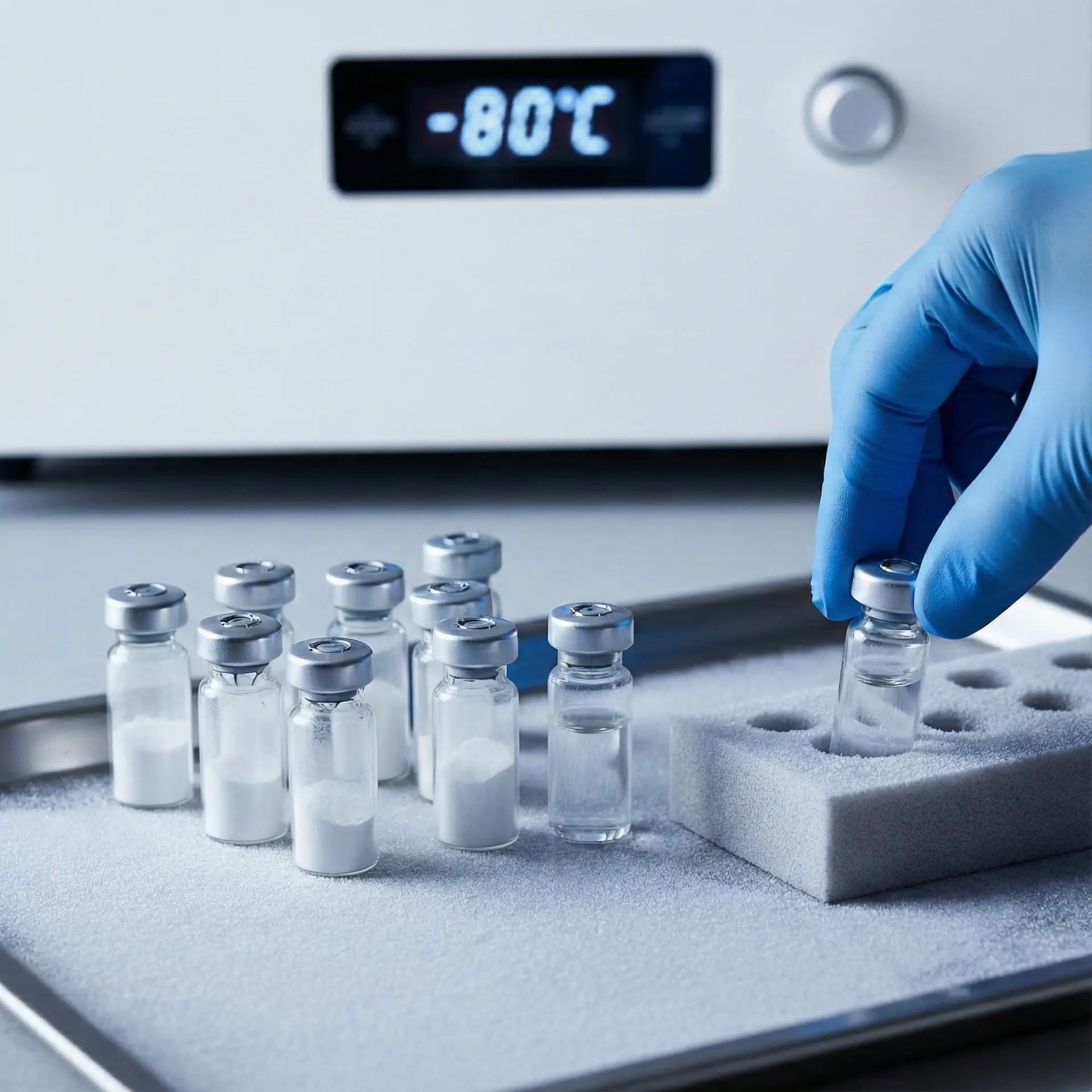
Best Practices For Storing Peptides

Best Practices For Storing Peptides

To preserve the integrity of your laboratory results, the proper storage of peptides is absolutely essential. Correct handling ensures that peptides remain stable for years, guarding against oxidation and degradation that could otherwise render your peptides useless for experimentation. While stability can vary based on composition, knowing the best practices for storing peptides will significantly […]
popup laboratory
New Researchers Special Offer

20% Off

Molecular Edge Peptides Logo

Welcome to Molecular Edge Peptides

You must be at least 21 to visit this site.

By entering this site, you are accepting our Terms of Service

DISCLAIMER: All products sold by Molecular Edge Peptides are strictly intended for laboratory research use only. They are not approved for human or animal consumption, or for any form of therapeutic or diagnostic use.

We do not provide usage instructions, dosing guidelines, or any advice regarding the application of our products.

medgepeptides.com is a research supply company only.

0