
TL;DR: Published preclinical research on TB-500 (a synthetic fragment of Thymosin Beta-4) reports favorable tolerability in murine models, with most observed adverse signals traced to impurities rather than the peptide itself. TB-500 side effects in controlled in vitro and in vivo studies remain limited when peptide purity exceeds 99%, reinforcing purity as the single most critical variable in research-grade safety data.
Table of Contents
- What Is TB-500 and Why Do Researchers Study Its Safety Profile?
- What Does the Preclinical Literature Say About TB-500 Side Effects?
- How Does Thymosin Beta-4 Interact With Cellular Pathways in Research Models?
- Why Does Peptide Purity Influence TB-500 Side Effects in Research?
- What Do Cardioprotective Studies Reveal About TB-500 Tolerability?
- How Should Researchers Evaluate TB-500 Safety Data and Study Design?
- Frequently Asked Questions
What Is TB-500 and Why Do Researchers Study Its Safety Profile?
TB-500 is a synthetic peptide fragment derived from Thymosin Beta-4 (Tβ4), a naturally occurring 43-amino-acid protein classified as the primary actin-sequestering molecule in eukaryotic cells. Understanding TB-500 side effects is a central concern in peptide research because the compound appears in hundreds of published preclinical studies spanning cardiology, ophthalmology, and connective tissue biology.
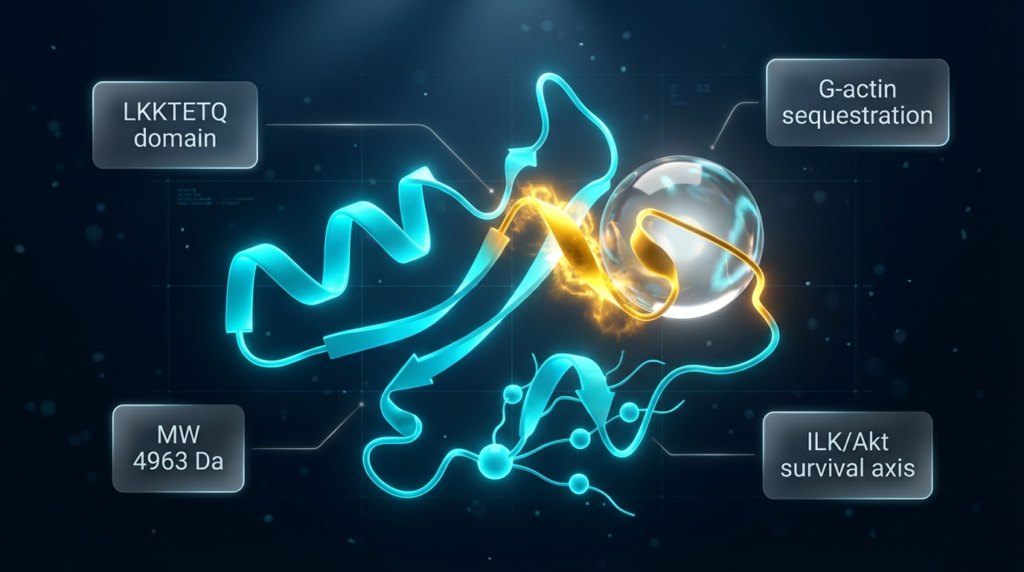
Thymosin Beta-4 was first isolated from calf thymus tissue and has since been detected in nearly every mammalian cell type, platelets, and wound fluid. [1] The synthetic fragment TB-500 corresponds to the active region of the parent molecule, specifically the 17-amino-acid sequence containing the actin-binding domain (LKKTETQ). Researchers have investigated TB-500 across in vitro cell culture assays and in vivo murine models to characterize its biological activity, including its influence on cellular migration in connective tissue models.
Because Thymosin Beta-4 participates in fundamental cytoskeletal processes, safety profiling requires controlled, high-purity conditions to separate intrinsic peptide activity from artifact. This article examines what published research reveals about TB-500 side effects, why impurities confound safety data, and how purity thresholds affect experimental outcomes.
What Does the Preclinical Literature Say About TB-500 Side Effects?
Across the published preclinical literature, TB-500 side effects in controlled research settings are consistently described as minimal when high-purity synthetic peptide is used. Most in vivo murine studies that administered Thymosin Beta-4 systemically reported no significant adverse events at the concentrations evaluated.
In the landmark 2004 study by Bock-Marquette et al., systemic administration of Thymosin Beta-4 in a murine coronary artery ligation model demonstrated enhanced myocyte survival and improved cardiac function without reported toxicity events at the experimental concentrations used. [2] Goldstein et al. documented that Tβ4 is released endogenously by platelets, macrophages, and other cell types after tissue injury, suggesting a built-in physiological tolerance for the molecule in mammalian systems. [1]
Sosne and colleagues, studying Thymosin Beta-4 in corneal injury models, observed anti-inflammatory effects without notable adverse reactions in the experimental protocols described. [3] The compound suppressed NF-kB-mediated inflammatory signaling in corneal tissue in vitro, a pathway modulation that did not produce cytotoxicity at the concentrations tested.
However, researchers consistently emphasize that the absence of observed TB-500 side effects in preclinical models does not constitute a comprehensive human safety profile. Formal toxicology studies with standardized dose-escalation protocols remain limited in the published literature.
How Does Thymosin Beta-4 Interact With Cellular Pathways in Research Models?
Thymosin Beta-4 exerts its primary biological activity through G-actin sequestration, which directly regulates cytoskeletal dynamics, cell motility, and downstream signaling cascades. The actin-binding domain (amino acids 17-23, sequence LKKTETQ) is the most extensively characterized functional region of the molecule. [4]
In research models, Tβ4 forms a functional complex with PINCH and integrin-linked kinase (ILK), resulting in activation of the survival kinase Akt. [2] This ILK/PINCH/Akt signaling axis is the primary pathway through which researchers observe Thymosin Beta-4’s cytoprotective effects in cell culture assays.
Key Pathways Characterized in Published Research
- Actin sequestration: Tβ4 binds monomeric G-actin in a 1:1 stoichiometric ratio, modulating polymerization dynamics
- ILK/Akt activation: promotes cell survival signaling and suppresses apoptotic pathways in cardiomyocyte and endothelial cell models
- NF-kB suppression: reduces pro-inflammatory cytokine expression in corneal and connective tissue in vitro models [3]
- Ac-SDKP release: the N-terminal tetrapeptide fragment demonstrates anti-fibrotic activity in separate studies [4]
The multi-pathway activity of Thymosin Beta-4 in research models explains why TB-500 side effects must be evaluated across multiple tissue types and experimental conditions rather than extrapolated from a single assay.
Why Does Peptide Purity Influence TB-500 Side Effects in Research?
Peptide purity is the single most consequential variable determining whether observed adverse effects in TB-500 research are intrinsic to the molecule or attributable to contaminants. Impurities introduced during solid-phase peptide synthesis (SPPS) – including deletion sequences, truncated fragments, residual solvents, and endotoxins – can produce confounding biological signals that are mistakenly attributed to the target peptide.
Purity Level Impact on Research Outcomes
| Purity Level | Contaminant Profile | Research Impact |
|---|---|---|
| <90% | High levels of deletion sequences, truncated peptides, residual TFA/solvents | Data unreliable – adverse signals likely from impurities, not target peptide |
| 90-95% | Moderate deletion sequences, possible endotoxin contamination | Confounded results – difficult to distinguish peptide-specific effects from artifact |
| 95-98% | Low-level truncated fragments, trace solvents within pharmacopeial limits | Acceptable for preliminary screening, but not for definitive safety profiling |
| >99% (HPLC verified) | Minimal contaminants confirmed by HPLC chromatogram and mass spectrometry | Gold standard for reproducible safety data – adverse signals attributable to peptide with high confidence |
In the context of published TB-500 side effects data, studies utilizing research-grade peptide with documented Certificate of Analysis (CoA) data – including HPLC chromatograms confirming >99% purity and mass spectrometry confirming correct molecular weight – consistently report more favorable tolerability profiles than those using lower-purity preparations.
Endotoxin contamination is a particularly significant confounder. Bacterial endotoxins (lipopolysaccharides) at concentrations as low as 0.5 EU/mL can activate Toll-like receptor 4, triggering inflammatory cascades that have nothing to do with the peptide being studied. This is why endotoxin testing (LAL assay) alongside HPLC purity verification is essential for generating reliable TB-500 safety data.
Molecular Edge Peptides supplies research-grade Wolverine Blend (BPC-157 + TB-500) manufactured to >99% purity with full Certificate of Analysis documentation for qualified in vitro laboratory research use exclusively.
What Do Cardioprotective Studies Reveal About TB-500 Tolerability?
The cardioprotective research line represents the most extensive body of in vivo tolerability data for Thymosin Beta-4, with multiple independent groups reporting favorable safety profiles in murine ischemia models. These studies are particularly informative for TB-500 side effects assessment because they involve systemic peptide administration and longitudinal observation periods.

Bock-Marquette et al. demonstrated that Thymosin Beta-4 treatment after coronary artery ligation in mice upregulated ILK and Akt activity in cardiac tissue, with enhanced early myocyte survival and improved cardiac function. [2] The study described no adverse events attributable to the peptide itself across the experimental timeline.
In a translational large animal model, Hinkel et al. used recombinant adeno-associated virus encoding Thymosin Beta-4 (rAAV.Tβ4) in a porcine chronic myocardial ischemia model. [5] The study reported that rAAV.Tβ4 enhanced capillary density and maturation, improved ejection fraction, and promoted collateral growth. Tolerability in this larger model was consistent with the murine data, with no treatment-emergent adverse events described that could be attributed to Thymosin Beta-4.
Bock-Marquette further documented that Tβ4 reactivated epicardial progenitor cells and initiated simultaneous myocardial and vascular regeneration, a process observed even in the absence of injury. [6] This finding is significant from a safety perspective because it suggests the compound’s regenerative activity follows endogenous signaling pathways rather than triggering aberrant cellular responses.
Researchers studying TB-500 in combination protocols, including the BPC-157 and TB-500 synergy model, evaluate tolerability across compound interactions, adding another dimension to safety data generation.
How Should Researchers Evaluate TB-500 Safety Data and Study Design?
Rigorous evaluation of TB-500 side effects requires attention to peptide sourcing, purity documentation, study design controls, and the distinction between compound-specific and contaminant-mediated signals. The following framework addresses common confounders in preclinical peptide safety research.
Critical Variables in TB-500 Safety Assessment
- Purity verification: HPLC chromatogram confirming >99% peak purity and mass spectrometry confirming expected molecular weight (4,963 Da for the full Thymosin Beta-4 sequence)
- Endotoxin testing: LAL assay results documented on CoA, ideally <0.1 EU/mg
- Concentration-response design: dose-escalation protocols with appropriate vehicle controls to establish concentration-dependent effect thresholds
- Observation timeline: longitudinal monitoring across multiple time points to capture delayed-onset signals
- Tissue specificity: evaluation across multiple cell types and organ systems, since actin dynamics vary by tissue
Researchers accessing the broader peptide research landscape can reference the 2026 Master Index of Peptide Research Protocols, Hubs, and Standards for standardized frameworks applicable to safety data collection.
The peptide therapeutics field broadly recognizes that research-grade compounds are valued for their selectivity and tolerability relative to small molecule compounds, as reviewed by Fosgerau and Hoffmann. [7] For TB-500 specifically, maintaining strict purity standards and transparent CoA documentation remains the foundational requirement for generating clean, reproducible safety data.
For researchers working with KLOW Blend (BPC-157 + TB-500 + KPV + GHK-Cu) or other multi-peptide formulations, purity requirements apply to each individual component, as contaminants in any single peptide can confound the safety profile of the entire formulation.
For in vitro research use only. Not for human or animal consumption.
Frequently Asked Questions
What are the most commonly reported TB-500 side effects in published research?
Published preclinical research on TB-500 side effects in controlled murine and in vitro models reports minimal adverse signals when high-purity (>99%) synthetic peptide is used. The most extensive body of data comes from cardioprotective studies by Bock-Marquette et al. and Hinkel et al., which describe favorable tolerability in coronary artery ligation models. Adverse events reported in lower-quality studies are frequently traced to impurities such as deletion sequences, truncated fragments, or bacterial endotoxin contamination rather than to Thymosin Beta-4 itself.
Why is peptide purity important when evaluating TB-500 safety data?
Peptide purity directly determines whether observed biological signals – including any adverse effects – are attributable to the target compound or to synthesis-related contaminants. Impurities from solid-phase peptide synthesis, including deletion sequences, residual solvents, and endotoxins, can activate inflammatory pathways and produce cytotoxic effects unrelated to TB-500. Research conducted with >99% HPLC-verified peptide and documented endotoxin testing consistently produces more reliable, reproducible safety data.
Has TB-500 been studied in large animal models for tolerability?
Yes. Hinkel et al. (2017) evaluated Thymosin Beta-4 delivered via recombinant adeno-associated virus in a porcine chronic myocardial ischemia model. The study reported enhanced capillary density, improved ejection fraction, and promoted collateral growth with no treatment-emergent adverse events attributed to the peptide. This large animal data supplements the extensive murine literature on Thymosin Beta-4 tolerability.
What is the relationship between TB-500 and Thymosin Beta-4?
TB-500 is a synthetic peptide corresponding to the biologically active region of Thymosin Beta-4, the full 43-amino-acid protein. The terms are frequently used interchangeably in the research community, although technically TB-500 refers to the synthetic fragment centered on the actin-binding domain (LKKTETQ sequence, amino acids 17-23). Both the full-length protein and the synthetic fragment have been studied in preclinical models, with overlapping but not identical activity profiles.
What concentration ranges are used in published TB-500 research studies?
Published in vitro studies typically evaluate Thymosin Beta-4 at concentrations ranging from nanomolar to low micromolar ranges. In vivo murine studies generally report concentrations in the microgram range administered via intraperitoneal or systemic routes. Specific concentration parameters vary by study design and target tissue model, and researchers should consult primary source publications for concentration details relevant to their experimental design.
How does TB-500 compare to other peptides in terms of research safety profiles?
In the published preclinical literature, Thymosin Beta-4 demonstrates a favorable tolerability profile consistent with its status as an endogenously produced peptide found in nearly all mammalian cells and body fluids. Fosgerau and Hoffmann noted in their 2015 review that peptides as a class are generally recognized for high selectivity and relative safety in research contexts. However, direct comparative safety studies between TB-500 and other research peptides (such as BPC-157 or GHK-Cu) are limited, and researchers should evaluate each compound independently using appropriate controls.
Disclaimer: All products sold by Molecular Edge Peptides are strictly intended for laboratory research use only (in vitro). They are not approved for human or animal consumption, or for any form of therapeutic, diagnostic, or clinical use. The information in this article is for educational and scientific reference purposes only. We do not provide usage instructions, dosing guidelines, or any advice regarding personal application of our products. Always consult relevant regulatory frameworks before conducting research with these compounds.
References
- Goldstein AL, Hannappel E, Sosne G, Kleinman HK. Thymosin beta4: a multi-functional regenerative peptide. Basic properties and clinical applications. Expert Opin Biol Ther. 2012;12(1):37-51. PubMed: 22074294
- Bock-Marquette I, Saxena A, White MD, DiMaio JM, Srivastava D. Thymosin beta4 activates integrin-linked kinase and promotes cardiac cell migration, survival and cardiac repair. Nature. 2004;432(7016):466-472. PubMed: 15565145
- Sosne G, Qiu P, Goldstein AL, Wheater M. Thymosin beta4 and corneal wound healing: visions of the future. Ann N Y Acad Sci. 2010;1194:190-198. PubMed: 20536468
- Goldstein AL, Kleinman HK. Biological activities of thymosin beta4 defined by active sites in short peptide sequences. Ann N Y Acad Sci. 2010;1194:1-9. PubMed: 20179146
- Hinkel R, Howe A, Renner S, et al. Diabetes Mellitus-Induced Microvascular Destabilization in the Myocardium. J Am Coll Cardiol. 2017;69(2):131-143. PubMed: 28081822
- Bock-Marquette I, Saxena A, White MD, DiMaio JM, Srivastava D. Thymosin beta4 and cardiac repair. Ann N Y Acad Sci. 2010;1194:87-96. PubMed: 20536454
- Fosgerau K, Hoffmann T. Peptide therapeutics: current status and future directions. Drug Discov Today. 2015;20(1):122-128. PubMed: 25450771