
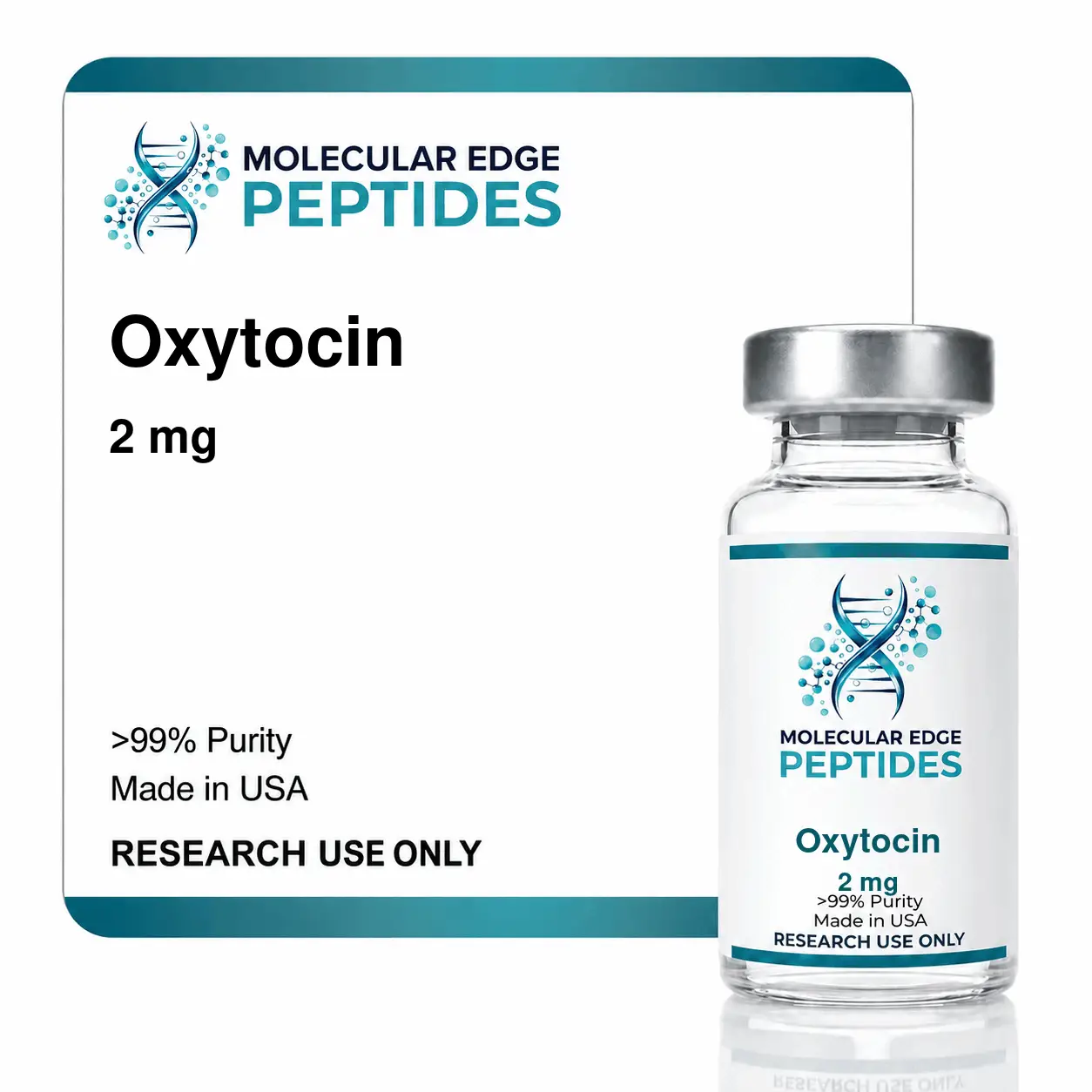
Oxytocin (2mg): Product Description
Oxytocin is a cyclic nonapeptide hormone consisting of nine amino-acid residues joined in a structure containing an intramolecular disulfide bridge. Synthetic Oxytocin is used in laboratory research involving oxytocin-receptor binding, neuroendocrine communication and receptor-mediated intracellular signaling.
Controlled experimental models may examine G-protein-coupled receptor activity, intracellular calcium mobilization, smooth-muscle-cell signaling and neurological pathways associated with social recognition and behavioral communication. These represent research areas only and should not be presented as established effects of the Molecular Edge product.
The peptide’s disulfide bond is an important structural feature and may affect stability, folding and receptor affinity. Researchers must consider storage conditions, preparation, oxidation state and assay environment when interpreting experimental results.
currently lists Oxytocin in a 10 mg presentation, while the Molecular Edge catalog specifies 2 mg. The concentration should be confirmed against the physical inventory and Certificate of Analysis before publication. The molecular formula remains the same regardless of vial quantity.
Research Specifications
Molecular Formula: C43H66N12O12S2
Molecular Weight: Approximately 1,007.19 g/mol
CAS Number: 50-56-6
Amino Acid Count: 9
Compound Type: Synthetic cyclic nonapeptide
Structural Feature: Intramolecular disulfide bridge
Molecular Edge Presentation: 2 mg
Presentation: 10 mg
For Research Use Only. Not for human or animal consumption. Not intended for diagnostic or therapeutic use.

Reviews
There are no reviews yet.